- Release Date:2026-04-13
- Views:0
- Source:redoo
1. Market Overview
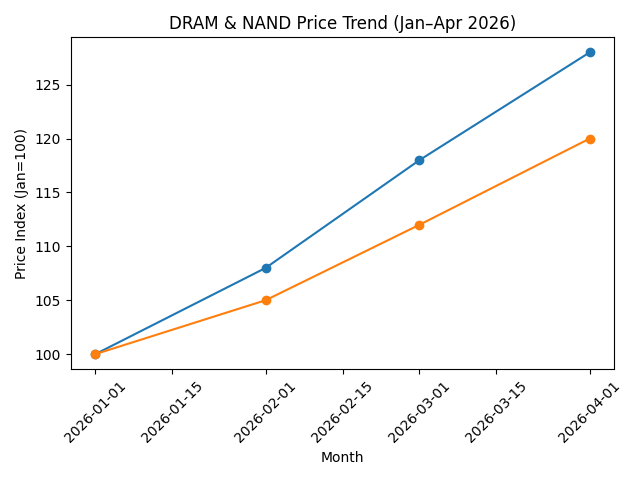
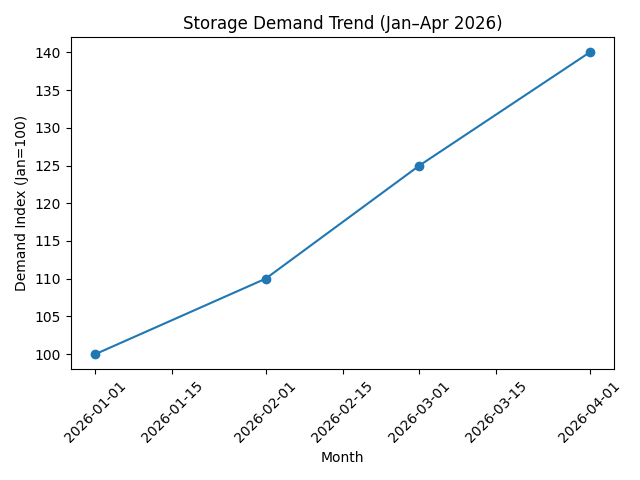
In April 2026, the global storage market — particularly DRAM and NAND Flash — continues to show a clear upward trend in both pricing and demand.
After a prolonged period of inventory correction throughout 2024, the market has now entered a new supply-tight cycle, driven by:
- Strong recovery in AI server deployments
- Continued expansion of cloud data centers
- Increasing demand from enterprise storage systems
- Gradual rebound in consumer electronics
As a result, both spot prices and contract prices have been rising steadily since Q1 2026.
2. Price Trends: DRAM & NAND
📈 DRAM (DDR4 / DDR5):
- Prices increased approximately 10–20% in April
- DDR5 demand continues to outpace supply, especially in server applications
- Major suppliers are prioritizing high-margin AI and data center clients
📈 NAND Flash:
- Prices rose by 5–15%, depending on capacity and grade
- Enterprise SSD demand is significantly stronger than consumer SSD
- Suppliers are maintaining disciplined output control, preventing oversupply
👉 Key takeaway:
The market is shifting from buyer’s market → seller’s market
3. Demand Drivers
🔹 AI & Data Centers
- Large-scale deployments by cloud providers are consuming massive DRAM & SSD volumes
- AI training workloads require high bandwidth memory + high-capacity storage
🔹 Enterprise IT Infrastructure
- Ongoing upgrades in servers and storage arrays
- Increasing demand for high-reliability and long lifecycle components
🔹 Industrial & Embedded Systems
- Stable demand from automation, telecom, and edge computing
- Preference for long-term supply stability over lowest price
4. Supply Situation
Despite increased demand, supply remains constrained due to:
- Major manufacturers maintaining controlled production output
- Capacity allocation shifting toward advanced nodes (DDR5, high-layer NAND)
- Limited availability of certain legacy parts (DDR3 / lower-density NAND)
⚠️ This creates:
- Longer lead times
- Reduced spot availability
- Increased pricing volatility
5. What This Means for Buyers
For OEMs, ODMs, and procurement teams:
✅ Secure supply early — avoid last-minute sourcing
✅ Consider alternative brands or configurations
✅ Lock pricing where possible to avoid further increases
✅ Work with flexible suppliers who can access global channels
6. Outlook for May–June 2026
The upward trend is expected to continue in the near term:
- DRAM prices likely to rise further 5–10%
- NAND expected to remain stable or slightly increase
- Demand from AI infrastructure will remain the key driver
📌 Unless there is a sudden macroeconomic slowdown,
the storage market is expected to remain tight through Q2 2026